Bulb Mode


Bulb Mode


What is the bulb setting on your camera all about? How do you use it? How does it work? Why would you want to choose this camera mode for shooting? Watch below to find out!

tweet it!


Spread the joy! Share today’s tweetable!

Video Transcript

Hello! It’s Julie here from Ultimate Photo Tips. Today’s two minute tip is all about bulb mode on your camera. This mode is typically used for taking exposures that are longer than 30", which is the longest shutter speed that’s programmed as a setting on your camera. You might use the bulb setting for doing night photography, where you need very long exposures to capture enough light. Or you might use it for photographing fireworks or lightning, where you leave the shutter open until the event occurs, and then end the exposure.

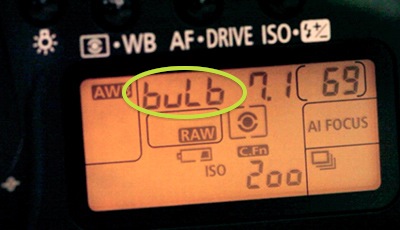
To use the bulb setting on your camera, switch to either manual mode or shutter priority mode, and then slow down your shutter speed until you get to 30 seconds. One more click should put you in bulb mode. Alternatively, on some Canon SLRs, there’s a bulb mode built right into the main control dial. Instead of Manual or shutter priority mode, you actually pick bulb directly. It’s marked with a "B."

bulb setting

In bulb mode, the shutter remains open for as long as shutter release is held down. That means that either your finger is holding down the shutter release button — which is not the best option, since you could be shaking the camera — or your cable release is locked into the shooting position. If you are using a wireless remote, you will press the remote once to open the shutter and a second time to close it.

That’s the bulb setting in a nutshell! If want more great tips, please visit me on ultimate-photo-tips.com, and be sure to sign up for my newsletter.

Happy shooting, and I’ll see you next time!

Want to Make Photos that "WOW?"

If so, we can help you learn:

creativity exercises

  1. the A-Z of exposure and composition
  2. how to translate what you see into a photo that conveys how you feel
  3. how to be a more creative photographer

Just enter your name and email below and click “Sign me up!” to receive our friendly and helpful newsletter. Plus, get your welcome bonus, “12 Fun Exercises to Inspire Your Photographic Creativity.”


I am also interested in news about…


(it’s free!)


Africa Dance!


Africa Dance


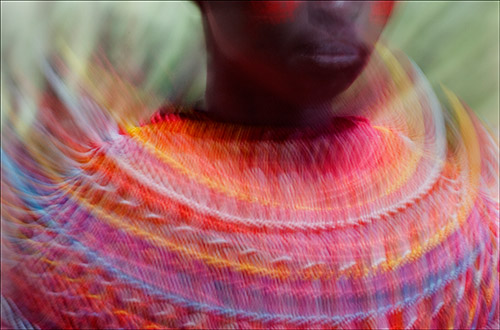
Join photographer Katherine Keates as she journeys to Africa to explore the Samburu tribal dances through a series of stunning, selective focus and long exposure photos. Katherine brings the story of the Samburu culture and traditions to life through her images and her words.
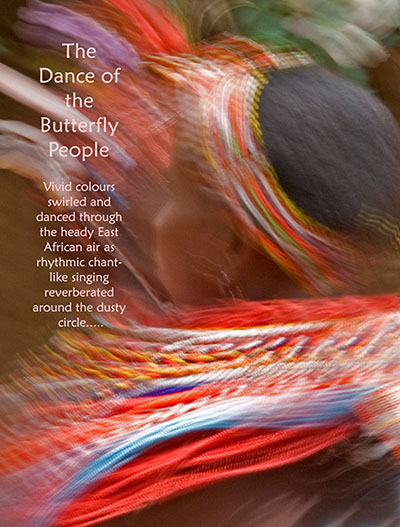
africa dance
© Katherine Keates
"
Whirling Dervish"

The Dance of the Butterfly People

Story and images by Katherine Keates
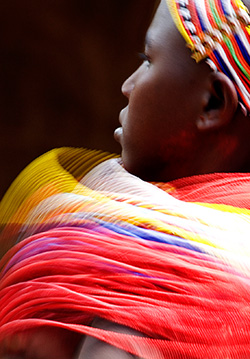
africa dance
© Katherine Keates
Africa Dance
"Dancing Samburu Girl"

Vivid colours swirled and danced through the heady East African air as rhythmic chant-like singing reverberated around the dusty circle. To the hypnotic beat of an ancient chant, women bounced and flaunted their vibrant neck collars made of rope upon rope of delicately strung beads while men jumped in a competition of height and stamina. I was simply spellbound. Uneducated as to the history of this spirited and richly coloured performance of a traditional Samburu dance, there was one thing I knew for sure, and that was that someone was really trying to impress someone. And it was working.

The Samburu people are not so distant relatives to the Maasai although they live just above the equator where the foothills of Mount Kenya merge into the northern desert and slightly south of Lake Turkana in the Rift Valley Province of Kenya in East Africa.

This is a warrior-race of cattle-owning pastoralists. The Samburu, proud of their culture and traditions, still cherish and retain the customs and ceremonies of their ancestors, unlike many other tribes in Kenya who have been more influenced by Western civilization. They are a group that broke away from the main tribe and remained as others pushed further south. The Samburu people are completely dedicated to the raising and nurturing of their livestock, almost to the virtual exclusion of everything else. Their cattle are their life, their wealth, their livelihood and they are profoundly symbolic of status and success within the tribe. To this day, a man still pays a dowry in cattle to the parents of a future bride.
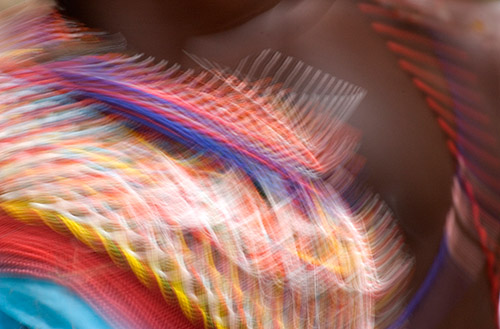
africa dance
© Katherine Keates
Africa Dance
"Colour in Motion"

In front of the backdrop of the often barren and dusty horizon, the Samburu people bring life and colour to the landscape either out on the plains swathed in their brilliant red cloth or, even more dazzlingly, in their village with their songs and dances. Typically and traditionally, they use no instruments, even drums. They have dances for various occasions of life. But no matter what the occasion, the men primarily dance by jumping, and high vertical jumping from a standing position is like a competitive sport. Most dances involve the men and women dancing in separate circles with specific moves for each sex, while still coordinating the movements of the two groups. The central musical theme of the Samburu dances is a deep reverberating male vocal sound, a rhythmic chanting hauntingly similar to the territorial call of a lion. Warriors move with a series of astonishing vertical leaps, fiercely encouraged by the cries and shouts of other observing warriors while the women bounce, flip and swirl their magnificent collars of beads.

Traditional Samburu settlements are always situated in locations of tremendous geographic beauty, often overlooking spectacular vistas. The aesthetic appreciation of beauty is a major part of Samburu life and their beliefs, and this shows itself most in an incredible attention to physical appearance and adornment. The name "Samburu" was given to them by other tribes, and directly translates as Butterflies or Butterfly People. This was most likely gained because of the impression of delicacy created by their personal ornamentation. However, this delicacy and beauty is not to be mistaken, as it is merely an illusory contrast to their fearsome reputation for hunting and fighting.
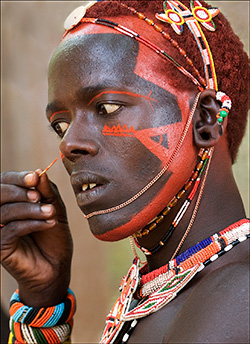
africa dance
© Katherine Keates
Africa Dance
"The Warrior"

The warriors, known as moran, are the most visually striking members of this unique society and are unquestionably attractive to young girls. They live a rather pleasant and undemanding life with permissive sex for roughly 14 years. Most of them will at one time or another have many lovers who will lavish them with gifts of beads and other trinkets. These young men are flamboyant in their style of dress and are incredibly vain. They frequently apply abstract designs in orange to their faces and red ochre to their heads, necks and shoulders and spend hours adorning each other. Who could doubt that moranhood is considered the best period of a Samburu man’s life.

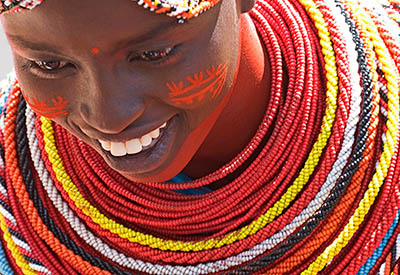
When adolescent girls attend the dances, which are organized by the moran of their clan, they are deeply aware of the importance of their appearance. They paste red ochre onto their heads, they darken their eyebrows with charcoal, and paint elaborate designs on their faces all the while chattering, teasing and giggling in anticipation of the dance. A small compact mirror or piece of reflective metal is an item of great value to a Samburu, male or female. If the young lady is attractive enough to earn attention from a moran, it is likely that she will become a mistress to him and enjoy his protection. Over the years he will heap beads upon his lover or "bead girl" as a symbol of his affection.

Samburu women do not wear the distinctive large flat necklaces of the Maasai. Instead, they are, from a young age, given single loop bead necklaces by young morans. These precious beaded gifts are given regularly and liberally by young Samburu admirers, and it is not long until the necklaces soon merge to form a thick collar of multihued beads. In the Samburu society, body adornments clearly indicate a person’s social or ritual status, and the exchange of such adornments simply defines the social relationship between the giver and the recipient.   And all of this is joyously flaunted in the dances of the ‘Butterfly People’.

Tip

The majority of Katherine’s Africa dance action shots were shot at ISO 100, f/7 to f/11, with shutter speeds between 1/8s and 1/125s, with 1/20s being the most effective.

Shots are hand-held using a Canon 100-400mm IS lens with a polarizer to slow down the exposure.
africa dance
© Katherine Keates: Africa Dance: "Girl and Collar of Beads"

I moved around the circle with my camera and taking long exposure photos, or using selective focus, swung and moved to the music and tripped the shutter as the moment struck. I needed to capture the mood of this hypnotic dance as the primal beat and visceral sound of the feigned lion call spoke to my own deeply rooted primordial essence while colours of the Butterfly People swirled around my mind’s eye like a whirling dervish. When it was all over, I sat in the dusty circle, oblivious to the heat of the African sun, mesmerized and slightly intoxicated. It was then that I made a silent plea to the generations yet unborn that at least some remnants of tradition hold fast through the relentless winds of time and may it not all be lost.

Tip:

To learn how to create your own long exposure photos, try online photography classesfrom BetterPhoto.com. I’ve taken three of their online classes, and found them all to be excellent. The one I have linked here is called "The Creative Use of Shutter Speed." It’s a 4-week, online, instructor-led course that will teach you how to get different creative effects through you choice of shutter speed — just like the Africa dance shots Katherine has included here.

–Julie

About Katherine Keates
 

Katherine Keates

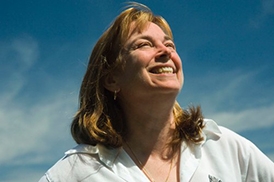
A photographer for many years, Katherine’s love of photography has led her to explore many avenues in the art and craft of photography. She has explored and photographed in places such as South Africa, Namibia, Botswana, Kenya, Tanzania, France, Israel, Hawaii, Alaska, China, the Galapagos Islands, Ecuador and many North American national parks. She particularly loves to shoot on her home turf in Ontario, Canada.

She strives to present a unique vision and apply an artistic approach to all of her subjects. This national and international award-winning photographer has taught workshops and presented instructional programs. Her prints have been displayed in traditional and unique gallery situations, and in numerous exhibitions, and her work can be found on the walls of private homes and corporate offices.

She has participated on the speakers’ circuit for the Greater Toronto Council of Camera Clubs specializing in Audio Visual presentations and is a qualified international photographic judge. She is currently an active member and Vice President of the Toronto Focal Forum print makers group.

Katherine is also a freelance writer and has had numerous articles and images published in both local and international photographic publications such as BBC Wildlife Photographer of the Year, Photo Life, Pets Magazine, Best of Photography, Local Colour and the CAPA Journal.

Katherine welcomes you to visit her website at:

www.katherinekeatesphotography.com
 

africa dance
© Katherine Keates
Africa Dance
"Colour of the Dance"

Next, you may want to read more articles from guest writers on learning digital photography.

Or you may want to learn more about shutter speed in our exposure basics.

Wide Angle Lens


Wide Angle Lens


Are you using your wide angle lens just so you can fit more stuff in the frame? Watch this video for seven great tips to help you get the most out of your lens. Using a wide angle properly can produce dramatic results that pull the viewer right into your image.

tweet it!


Spread the joy! Share today’s tweetable!

Video Transcript

Are you using your wide angle just so that you can fit more stuff into the frame? If you are, I can help you do better. I’m Julie from Ultimate Photo Tips, and today’s tip is all about using your wide angle lens. Wide angle lenses can be a bit tricky to use, but used effectively, they can produce some really dramatic results, and they can help your viewer feel they’re really pulled into the scene. Today, I’m going to give you seven tips for using wide angle lenses. Ready? Here we go!

1. Get close to your subject. Get closer than you’re used to – maybe even closer than you’re comfortable with. But do get up close and personal. Your wide angle lens can focus close, so that won’t be a problem.

2. Orient your camera vertically. Especially if you’re shooting landscapes, consider orienting your camera vertically. If this is the ground, you’re going to have your camera quite close to the ground, and you should probably angle it down just a little bit. That means you’re going to get a lot of foreground in the image, but the field of view is wide enough, that you’re going to see all the way up to the horizon.

Orient your camera vertcally with a wide angle lens
Orienting the camera vertically emphasizes the foreground
© Julie Waterhouse

3. Create a visually interesting foreground that’s free of distractions. Because you have so much foreground in the image, and because it gets exaggerated so much by this lens, make sure it’s interesting.

4. Make deliberate and careful compositions. Pay special attention to what’s being pulled in at the edges of the frame.

5. Be careful when photographing people. When photographing people with a wide angle, body parts that are close ti the lens are going to be distorted and exaggerated, and it might look a little bit funny.

Be careful of distorton when photographing people with a wide angle lens
Yikes, distortion! Big head, big arms, scary photo! Shot at 24mm
© Julie Waterhouse

6. Be aware of distortion. If you’re pointing your camera above or below the horizon, be aware that a wide angle lens can distort vertical lines. That can affect things like buildings.

7. Be careful when using a polarizing filter. The effect of the polarization, because it’s such a wide angle, won’t be even across the image. You may end up with a very dark blue sky on one side of the image, fading to a light blue on the other side.

Those are your tips or using a wide angle lens. Now it’s time to try them out. Get out there with your camera, take some pictures, and experiment!

If you like this video, please like it, tweet it and share it with your friends. For more great tips, be sure to visit ultimate-photo-tips.com and sign up for my newsletter, where I share tips, ideas and inspiration that I don’t share anywhere else!

Happy shooting, and I’ll see you next time.

Want to Make Photos that "WOW?"

If so, we can help you learn:

creativity exercises

  1. the A-Z of exposure and composition
  2. how to translate what you see into a photo that conveys how you feel
  3. how to be a more creative photographer

Just enter your name and email below and click “Sign me up!” to receive our friendly and helpful newsletter. Plus, get your welcome bonus, “12 Fun Exercises to Inspire Your Photographic Creativity.”


I am also interested in news about…


(it’s free!)


Digital Night Photography


Digital Night Photography


Have you ever wondered what shutter speed to use to capture star points, and not star trails? In this short video on digital night photography, Julie reveals the formula to use to calculate the maximum shutter speed you can use to keep those stars looking like points.

tweet it!


Spread the joy! Share today’s tweetable!

Video Transcript

Have you been curious about photographing the night sky, but you’re not really sure what settings to use so that your stars actually look like stars, and not lines in your photograph? Hi, I’m Julie from Ultimate Photo Tips, and today’s Two Minute Photo Tip is all about answering that question: what settings should you use on your camera so that you stars look like star points and not star trails?

Fist of all, you get star trails, meaning lines across your photograph, because the Earth is moving. If you leave your shutter open for a long period of time, the stars will move through your frame, and leave behind a trail of light. To avoid that, you need a short enough shutter speed that you stars come out just as points. So, what is that shutter speed, and how do we figure it out?

Digital Night Photography
Digital Night Photography: Star Points
© Julie Waterhouse Photography

A good rule of thumb, if you don’t want to do any math, is that for a wide angle lens, 30 seconds is about as long as you can go. If you want to know the exact number, there’s a formula. It’s 600 divided by the focal length of your lens. This is for a 35mm format camera.

Maximum shutter speed (in seconds) so stars appear as points:

600 / focal length of lens (for 35mm format cameras)

300 / focal length of lens (for medium format cameras)

So let’s say you’re using an 18mm lens. 600 / 18 = 33.3. So with an 18mm lens, 30 seconds is the longest exposure you can use and still have your stars rendered as star points.

If you are going to be using a very short exposure like that, to get star points, that’s not going to give you a lot of light. You have to boost your light in other ways. That means setting an aperture that’s quite wide, and boosting you ISO as high as your camera can comfortably go without getting too much noise, so at least 1600, and possibly as high as 6400.

Time to try it out! Wait for the next clear sky, and get your camera out there — on a tripod, of course! – and try doing some digital night photography.

That’s your two minute tip for today! If you like this video, please like it, tweet it and share it with your friends. For more great tips, be sure to visit ultimate-photo-tips.com and sign up for my newsletter, where I share tips, ideas and inspiration that I don’t share anywhere else!

Happy shooting, and I’ll see you next time.

Want to Make Photos that "WOW?"

If so, we can help you learn:

creativity exercises

  1. the A-Z of exposure and composition
  2. how to translate what you see into a photo that conveys how you feel
  3. how to be a more creative photographer

Just enter your name and email below and click “Sign me up!” to receive our friendly and helpful newsletter. Plus, get your welcome bonus, “12 Fun Exercises to Inspire Your Photographic Creativity.”


I am also interested in news about…


(it’s free!)


Photo Challenges: September 2012


Photo Challenges: September 2012


Photo Challenges:
September 2012

Abstracts

For the last couple of months, the winning challenge image has inspired the topic for the next month. That’s what happened this time, too! And it’s also a topic that was suggested on our Facebook Page. The topic is "abstract photos."

Abstract photos rely less on the actual content, and more on colors, lines, shapes, and textures, to produce a visually stimulating image. I think that creating abstract photos is excellent training for any photographer, as it causes us to concentrate on the fundamental building blocks of all images. If you can train yourself to see abstractly, I think that all of your photography will benefit.

Your imagination is your only limit when it comes to choosing subject matter that can be used to create abstract photos. I think the key is to find something that stirs your emotions, piques your curiosity, or excites you. Let’s see what you can find!

If you need a little extra inspiration, I found this wonderful collection of abstract photos online.

Read the rules. One entry only each month per person, please!

Enter your super-amazing photos in our photo contests. The winning image will be featured on the Ultimate Photo Tips homepage for all of the following month.

Submit your image.

See what other people are submitting, and vote for your favorite:
View other entries.


My Abstract View

I’ve decided not to tell you what each photograph is actually of. I think it would spoil it! 🙂 If it works as an abstract, it shouldn’t really matter what the subject is. If you’re just dying to know, then try out the commenting facility at the very bottom of this page (you must be signed in through Facebook, Yahoo, AOL or Hotmail), and ask me there.

photo contests
© Julie Waterhouse


photo contests
© Julie Waterhouse


photo contests

© Julie Waterhouse


photo contests
© Julie Waterhouse


photo contests
© Julie Waterhouse


photo contests

© Julie Waterhouse


photo contests

© Julie Waterhouse


***C2_invitation_28783691***


People in Nature Photography


People in Nature Photography


Do you tend to avoid including people in your nature and landscape photography? In this short video, Julie gives two good reasons to change your practice, and include people in your nature and landscape shots. Watch below to find out what they are.

tweet it!


Spread the joy! Share today’s tweetable!

Video Transcript

Hello! I’m Julie from Ultimate Photo Tips, back with another Two Minute Tip. I want to talk to you about including people in your photographs. I’m not talking about photos where your subject is a person, or a group of people. Instead, I want to encourage you to include people in photos of landscapes or nature.

For a long time, I was one of those photographers who waited until all the tourists cleared out of a spot before taking my picture. I wanted the scene to appear pristine and untouched. Now, there’s nothing wrong with that approach, but I want you to consider telling a different story.

Let me give you a couple of reasons why I’ve started including people in nature photography. First, having a person in the scene can add a sense of scale. Everyone knows immediately how big a person is, so if there’s a person in the image, we quickly assess the relative size of the other elements. If you’re in the forest photographing the giant sequoia tree, it doesn’t mean much until you put a person beside it.

Second, and probably even more significant, is that people in nature photography add that human interest factor. If there’s a person in the scene, then the viewer can easily substitute themselves, and imagine being there. It gives the photo a sense of immediacy. If you’re submitting photos to magazines, they love the inclusion of people because their readers can relate better to the image.

If you are going to include people in images that you intend to sell, of course you need to make sure you get the appropriate model releases. You also want to include the right people in the photo. Any old tourist may not be the best choice. You want someone well-groomed, and dressed appropriately for the scene. Your best — and most cooperative! — subject might just be yourself, so consider using a timer delay when you shoot, and including yourself in your photo.

Let me close with a couple of examples so you can decide whether you prefer the one with or without me in the frame.

Here’s the Hopewell Rocks in New Brunswick, Canada at sunrise:

Hopewell Rocks
Hopewell Rocks, NB, Canada, with no one in the scene
© Julie Waterhouse Photography

And here they are again with me in the scene. Do you react any differently to this photo?

people in nature photography
Hopewell Rocks, NB, Canada, including myself in the scene
© Julie Waterhouse Photography

So get out there, and try a few photos with people in nature photography, and see if you like the difference it makes. For more photo tips, come on over to ultimate-photo-tips.com, and be sure to sign up for my newsletter.

Happy shooting, and I’ll see you next time!

Want to Make Photos that "WOW?"

If so, we can help you learn:

creativity exercises

  1. the A-Z of exposure and composition
  2. how to translate what you see into a photo that conveys how you feel
  3. how to be a more creative photographer

Just enter your name and email below and click “Sign me up!” to receive our friendly and helpful newsletter. Plus, get your welcome bonus, “12 Fun Exercises to Inspire Your Photographic Creativity.”


I am also interested in news about…


(it’s free!)


RAW Versus JPEG


RAW Versus JPEG


Are you confused about whether to shoot in RAW or JPEG? Not sure exactly what the difference is? Julie compares these two file formats in a short video, and recommends which you should be using.

tweet it!


Spread the joy! Share today’s tweetable!

Video Transcript

Hi! It’s time for another two minute photo tip. I’m Julie from Ultimate Photo Tips, and I’m here today with a quick comparison of RAW versus JPEG. Which one should you be using? And what’s the difference, anyway?

RAW and JPEG are different file formats that the camera can use to store your images. I like to compare the RAW format to unbaked cookie dough. Shooting RAW is like taking a digital negative. Your camera stores all the data that it captures. That means that you can take your RAW data, and bake your cookie to any recipe you want. In other words, you have complete control over the final look of your image, in terms of white balance, contrast, brightness and much more. And in fact, you can take your same RAW data, and process it in multiple ways – like baking several kinds of cookies – to create different final looks to your image. Now, a RAW image straight out of the camera never looks very good. You must expect to do some post-processing on your images using software like Lightroom, Photoshop, Aperture, or the RAW editor that comes free with your camera.

If RAW format is like unbaked cookie dough, then JPEG is a baked cookie. When you shoot in JPEG, the camera takes into account the picture modes that you have pre-selected, and then produces an image to those specifications, or a specific cookie recipe. Here’s the thing – JPEG is what’s known as a compressed file format. That means the final file is smaller than RAW (it’s been compressed down), but that’s because all the extra data not used in your recipe gets thrown away. Once you’ve made your choice, there’s no changing your mind, and re-processing the image. If you try to, every time you save the JPEG file, you will degrade the image and throw away more data.

If you are just starting out, I suggest that you concentrate on learning composition and exposure, and just shoot in JPEG. That way, your images are ready to send to print or the web without any more work. Figuring out post-processing software is a whole other learning curve!

If you are a more advanced photographer, and are ready to expand your creative control to include post-processing, then I encourage you to shoot in RAW for the best quality images, and the most flexibility and control.

Drop by ultimate-photo-tips.com for more information about raw versus jpeg file formats, as well as heaps more info and tips on other photography-related topics.

Happy shooting, and I’ll see you next time!

Find out more about RAW Versus JPEG

Find out more detail about raw vs jpeg.

Want to Make Photos that "WOW?"

If so, we can help you learn:

creativity exercises

  1. the A-Z of exposure and composition
  2. how to translate what you see into a photo that conveys how you feel
  3. how to be a more creative photographer

Just enter your name and email below and click “Sign me up!” to receive our friendly and helpful newsletter. Plus, get your welcome bonus, “12 Fun Exercises to Inspire Your Photographic Creativity.”


I am also interested in news about…


(it’s free!)


Background in Photography


Background in Photography


Never underestimate the importance of background in photography! This short video explains how your background can be the key to taking an image from snapshot to photograph.

tweet it!


Spread the joy! Share today’s tweetable!

Video Transcript

Have you ever wondered what the difference is between a snapshot and a photograph? You know it when you see it, but have you ever stopped to analyze what the real differences are? Hi, I’m Julie from Ultimate Photo Tips, and for today’s Two Minute Phot Tip, I want to talk about one of the factors that I think makes a difference: backgrounds.

Novice photographers tend to be so focused on their subject, that they forget all about the background in photography, whereas an advanced photographer is much more aware that the background is an integral part of the image – that it’s just as important as the foreground subject.

So how do you start taking your images from "snapshot" to "photograph?" The first thing you need to do is clean up your backgrounds. That’s like level 1. Make sure that the background has no distractions – no elbows or trees coming in from the side, no bright spots or dark spots to pull your attention away from the subject.

Then, at level 2, you actually want to start paying attention to what is in the background, and making sure that it complements your subject, that it works in harmony with it. So don’t just look at the objects in the background, but look at their shapes, and colors, and the lines in them and their textures, and make sure all those things are playing together with your subject, to actually enhance your subject.

A great way to get started with background in photography is to go out and to look at the work of photographers you admire. Make sure you take a look at the background in those pictures, and understand how they work with the subject. And then get out there and start practicing yourself!

If you want more great tips, please come on over to ultimate-photo-tips.com, and sign up for my newsletter while you’re there. Happy shooting, and I’ll see you next time!

Want to Make Photos that "WOW?"

If so, we can help you learn:

creativity exercises

  1. the A-Z of exposure and composition
  2. how to translate what you see into a photo that conveys how you feel
  3. how to be a more creative photographer

Just enter your name and email below and click “Sign me up!” to receive our friendly and helpful newsletter. Plus, get your welcome bonus, “12 Fun Exercises to Inspire Your Photographic Creativity.”


I am also interested in news about…


(it’s free!)


Photo Challenges: October 2012


Photo Challenges: October 2012


Photo Challenges:
October 2012

Serenity

Last week, as I was writing the creativity exercise for the weekly Ultimate Photo Tips newsletter, I talked about an exercise where you come up with the title of the photo first. This can be a tough challenge! Having the title first is a big restriction on what you can shoot, but that’s what gets you thinking creatively If you’re stuck for titles, I suggested you try using a song title. I also gave you a few examples:

I gave a few examples to get you started with ideas.

  • Joy to the World
  • Dreamscape
  • Ode to Monet
  • Serenity
  • Transformation

And that gave me the idea to pick one for this month’s photo challenge! So, "Serenity" it is. We all need a little serenity in our hectic lives. So please, share an image that says "serenity" to you.

Read the rules. One entry only each month per person, please!

Enter your super-amazing photos in our photo contests. The winning image will be featured on the Ultimate Photo Tips homepage for all of the following month.

Submit your image.

See what other people are submitting, and vote for your favorite:
View other entries.


Serenity Now!

…with apologies to fans of the TV show Seinfeld 🙂

Here are a few of my more serene images to inspire you…

photo contests
© Julie Waterhouse


photo contests
© Julie Waterhouse


photo contests

© Julie Waterhouse


photo contests
© Julie Waterhouse


photo contests

© Julie Waterhouse


photo contests
© Julie Waterhouse


***C2_invitation_28863642***


Bright Spots in Photos


Bright Spots in Photos


Do you understand the impact of bright spots in photos? They can work for you, to enhance your image, or they can work against you as distractions. Watch this video to make sure you have your bright spots working for you!

tweet it!


Spread the joy! Share today’s tweetable!

Video Transcript

Are you looking for a quick way to polish up your photographs? Hi, I’m Julie from Ultimate Photo Tips, and for today’s Two Minute Photo Tip, I want to talk about bright spots in photos. The way that the human brain is wired means that you’re viewer’s attention is going to go immediately to the brightest thing in your photograph. Now, this can work for you, or it can work against you.

It’s working against you if the brightest thing in the frame is not something that you want your viewer to be looking at. For example, you may inadvertently have a lamp, or even a window, or a blank, white sky, or even a white object that’s not part of your story. If any of those are in your frame, that’s where your viewer is going to look first, so you need to think about recomposing.

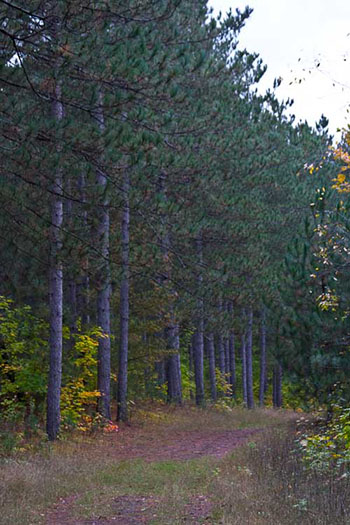
Bright spots on photos can be distracting
© Julie Waterhouse Photography
Your eye is drawn immediately to the bright sky in the top right.

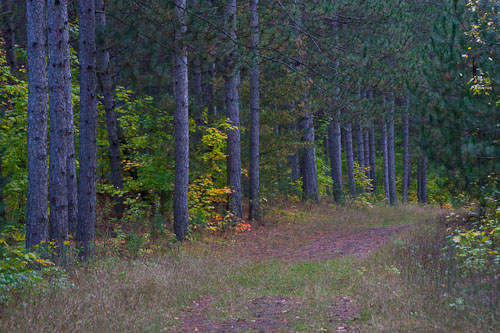
Bright spots in photos can be distracting
© Julie Waterhouse Photography
Eliminating the bright sky keeps your eye on the trees and path.

Now, it can also work for you, if you arrange things so that your subject is the brightest thing in the frame. That way, your viewer’s attention is immediately going to go just where you want it to.

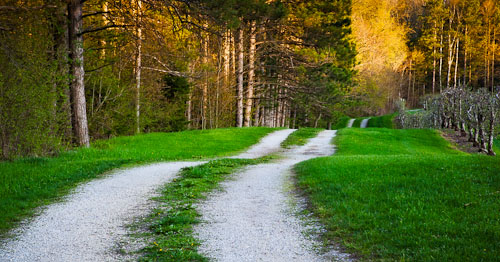
Bright spots in photos can draw attention
© Julie Waterhouse Photography
Here, the bright path leads the eye through the image to the lit trees at the end.

Make sure that you’re paying attention, and that you’re in control of where the bright spots in your images are!

That’s your tip about bright spots in photos for today! If you like this video, please like it, tweet it and share it with your friends. For more great tips, be sure to visit ultimate-photo-tips.com and sign up for my newsletter, where I share tips, ideas and inspiration that I don’t share anywhere else!

Happy shooting, and I’ll see you next time.

Want to Make Photos that "WOW?"

If so, we can help you learn:

creativity exercises

  1. the A-Z of exposure and composition
  2. how to translate what you see into a photo that conveys how you feel
  3. how to be a more creative photographer

Just enter your name and email below and click “Sign me up!” to receive our friendly and helpful newsletter. Plus, get your welcome bonus, “12 Fun Exercises to Inspire Your Photographic Creativity.”


I am also interested in news about…


(it’s free!)